
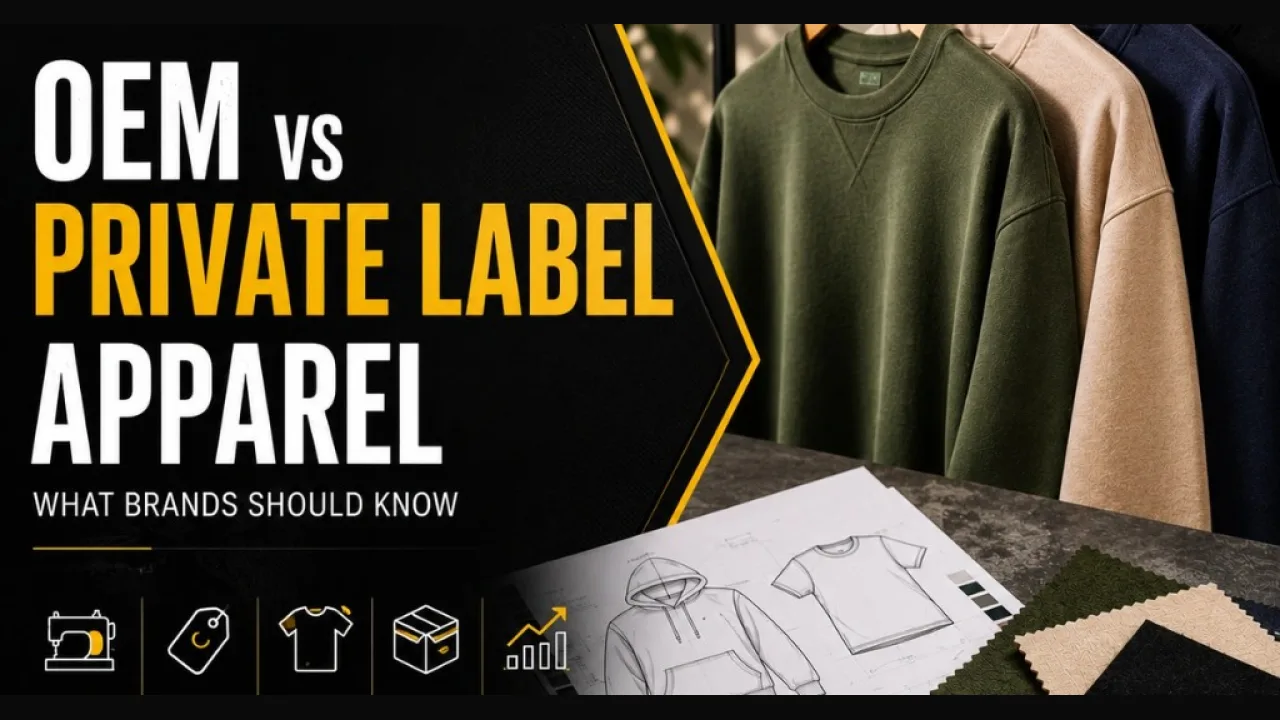
Buyers often use OEM and private label interchangeably. They overlap, but the commercial intent is different — and that affects pricing, sampling, and who owns the product DNA.
OEM apparel manufacturing
OEM (Original Equipment Manufacturing) usually means the factory builds garments to your exact technical specification: pattern, fabric, construction, and finishes. You bring the design DNA; the factory executes it at scale. OEM is ideal when you already have tech packs, graded specs, or a proven sample.
Private label apparel
Private label focuses on selling under your brand identity. The factory may develop from your references or adapt proven constructions, then apply your labels and packaging. It is the fastest path for brands that need retail-ready branding without building an in-house production team.
Side-by-side comparison
- Design ownership: OEM follows your locked specs; private label may start from factory-capable styles customized to your brand.
- Branding: Both can use your labels — private label almost always does.
- MOQ: Depends on fabric and decoration more than the label on the program.
- Speed: Private label adaptations can move faster; complex OEM tech packs need more sampling rounds.
SAMPRO supports both models across industrial workwear — coveralls, cargo sets, work jackets, shirts, pants, and crew uniforms. Start a program from the OEM & private label page.
Which model should you choose?
Choose OEM when fit and construction must match a locked tech pack. Choose private label when brand presentation and market testing matter first. Many growing brands start private label, then tighten OEM specs as reorders stabilize.
Related reading: private label manufacturing in Pakistan and our tech pack checklist.